Tracking
T.D.F.D.B.G: Learn It!
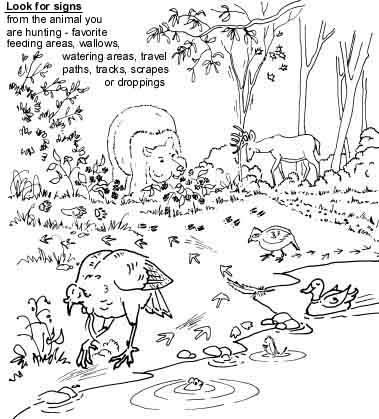
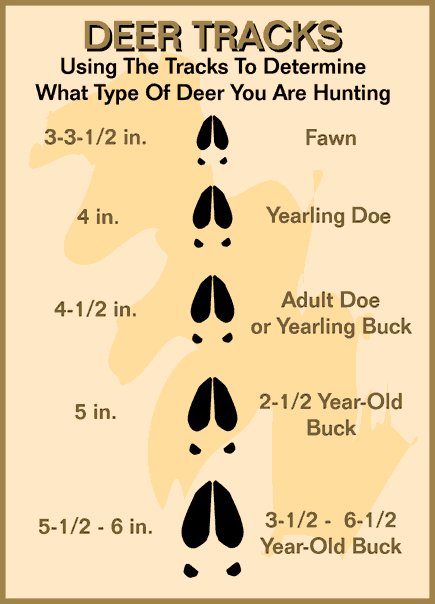
Tracks in damp soil may reveal how long ago an animal passed. Fresh tracks have sharp edges, older tracks have fuzzy edges.
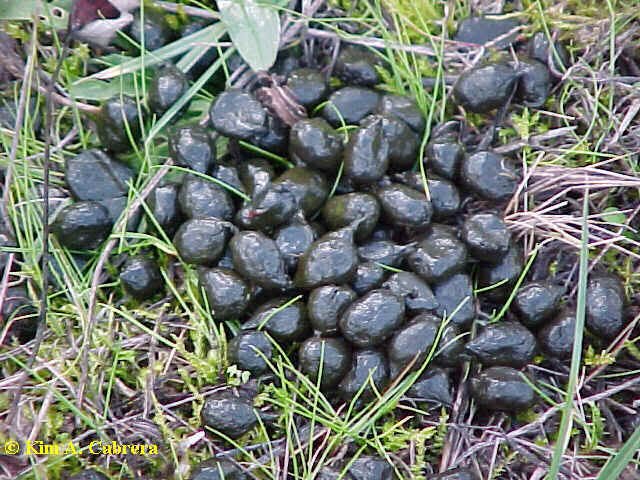
Droppings can tell the hunter if the animal is feeding. Some animals don't digest their food correctly. You can check droppings to see what they are eating.
Feeding signs include damaged crops, scratched earth, nipped ends on grasses or twigs, and shells of fruits or nuts.
Damaged trees and brush result from animals rubbing velvet from antlers, scraping trees to mark their territory, or chewing on bark. Each species has distinctive rubs, scrapes, and chews.
Beds and roosts in tall grasses in soft earth reveal the resting spots of mammals and birds. You can identify the animal from the size of the bed or roost and from nearby droppings, hair, or feathers.
Game trails lead from cover, food, or water. Several kinds of game use the same trails. Look for fresh tracks made by the animal you will be hunting.